
Making good use of wind
Posted December 19, 2025
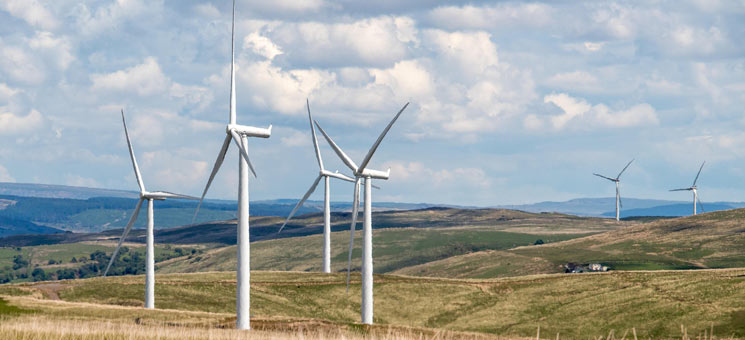
EverWind is a company advancing an ambitious green energy project that can be a wonderful addition to Nova Scotia’s economy. The company has committed to a wide array of wind turbine installations, which will support exportation of emissions-free fuel for electricity. The risk to worry about is political.
Green hydrogen is produced by using renewable electricity to split water into hydrogen and oxygen. Green ammonia, created by combining green hydrogen with nitrogen from the air, is a versatile clean fuel that can be used in agriculture, shipping, and global energy trade.
The plan is to build wind farms across the province with the resulting power transmitted to Point Tupper in Cape Breton, mostly through Nova Scotia Power assets. The power will be converted first to green hydrogen and then to ammonia that can be shipped to electrical utilities in Europe.
Phase 1 includes wind farms across mainland Nova Scotia. Those projects have received the necessary approvals, with pre-construction work underway.
The more recently announced phase 2 includes a series of wind farms in the Municipality of the District of Guysborough (MODG). The wind project’s Environmental Assessment was approved by the Nova Scotia Department of Environment and Climate Change in November 2025. With Guysborough being closer to Point Tupper, it makes sense for Everwind to provide its own transmission facility.
The facilities to create and store ammonia are being built there together with enhancements to the port that will accommodate ships designed to transport the product.
This is an exciting development for the Municipality, one of the most sparsely populated areas in the province, with fewer than 5,000 people in an area of 2,100 square kilometres.
EverWind highlights several benefits: 350–400 construction jobs and 20–35 long-term jobs; more than $3 million in annual tax revenue; and a Community Benefits Fund supporting $432,000 annually for local priorities such as infrastructure, recreation, and education.
Point Tupper is also receiving big benefits, including EverWind’s purchase of three new tugboats at a cost of $50 million, plus upgrades to the dock and equipment to fuel and fill ships with green ammonia once production begins.
If and when needed, the electricity from the wind farms can be a diverted to NSPI customers at a price to be determined by the Energy Board.
EverWind estimates that it will reduce global emissions by around 500,000 tons at full capacity. It has developed working partnerships with three First Nations.
EverWind touches all the right bases to receive substantial federal funding.
The project received a $125 million loan from the federal government. It is a blemish on the project that the Nov 17, 2023, press release did not mention that this was US dollars, equivalent to about C$166 million. EverWind advises that it has since paid approximately US$70 million toward interest and reducing the size of the debt.
Through the Clean Ports Stream of the Green Shipping Corridor Program, EverWind Fuels has been approved for up to $22.5 million in contribution funding to support the port operation improvements.
The participation of the three First Nations will be enabled by various government programs, providing both contributions and low interest loans.
The technologies being employed have worked in other areas. It is likely that EverWind will be able to finish building the first operating project in the next two to three years.
The political risk is not from governments of Nova Scotia or Canada.
EverWind is in advanced commercial discussions to sell green ammonia to major European energy companies. They have signed non-binding term sheets with multiple potential customers, each covering up to 500,000 tonnes per year. While these agreements are not yet binding, they demonstrate substantial market interest.
Electric utilities in France, Germany, and the United Kingdom are logical buyers. The present governments would be supportive of the project.
But the leaderss in all three countries are at risk of losing to hard right parties in upcoming elections: Alternative for Germany (AfD), National Rally (RN) in France led by Marine Le Pen, and Reform UK, led by populist Nigel Farage.
If those parties win power they may adopt a Trumpian disdain for green projects. They may not have the majorities needed to advance some of their own ideas, but as the largest party in each case they could prevent initiatives they don’t favour. Let’s hope your columnist is wrong.