
Houston owns the electricity rate problem
Posted March 27, 2026
“Today, we learned that the independent Nova Scotia Energy Board – effectively the judge and jury on power rates – agreed with Nova Scotia Power (NSPI) and approved what they asked for… I strongly disagree with this decision. It is out of touch in every way.”
This sounds like a leader of the opposition. But no, it is Premier Houston rushing to get ahead of the other parties, as if his government’s decisions have no blame for the outcome.
He stole all the opposition’s lines about a problem that he helped create.
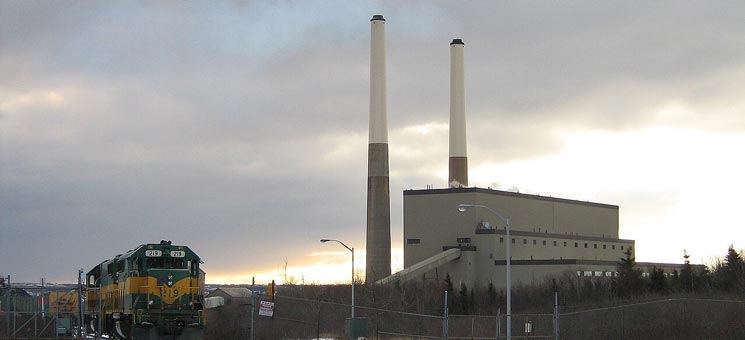
His Progressive Conservative government passed the Environmental Goals and Climate Change Reduction Act in 2021. It enshrined in law the requirement to stop using coal for electricity by 2030, echoing similar federal legislation by the Trudeau Liberals.
Neither government acknowledged that prematurely closing the coal-based plants would cost rate payers in future years.
As well, the provincial government requires NSPI to pay retail rates for electricity from solar installations on houses. They could easily buy from other jurisdictions at much lower cost. In addition they have to provide and install two-way meters at the dwellings.
These were defendable actions in the name of reducing climate change. But they also must be paid for. Ratepayers are still being charged for depreciation and minimal servicing of the coal plants and for the cost of high rates being paid for electricity from solar panels on homes.
Representatives of various consumer groups (see below) understand these realities. They also understand that ignoring these factors would just move the problem to future years, with interest.
The settlement agreement was signed off by a diverse group of representatives, including the Consumer Advocate, Small Business Advocate, Industrial Group, Port Hawkesbury Paper, and representatives for municipal electric utilities.
They understand that a failure to deal with the cost of retiring the coal plants will cause rating agencies to lower NSPI’s ratings, resulting in higher interest rates going forward.
Houston must understand that, but it does not show in his tirades.
One of his good decisions was his 2025 creation of the Nova Scotia Independent Energy System Operator.
It is responsible for long-term system planning, procurement of new electricity generation and storage, and grid operations (including real-time dispatch of electricity).
Nova Scotia Power remains responsible for electricity transmission, distribution (poles and wires), local customer service, and power restoration during outages.
That means that any new power installation would be subject to competition from qualified players, of which the new large wind installations would be competitive.
The goal is to have the right amount of power. At the end of his release criticizing the Energy Board’s decision, Houston applauded the Renewall Energy Inc. Mersey River Wind Project, as representing meaningful progress toward breaking the Nova Scotia Power monopoly.
That is a commendable idea. But it is not clear whether it will provide more power than is needed. If so it will have to export or store the energy; otherwise there will be more redundant assets adding more charges to NSPI customers.
Meanwhile, the cost of closing the coal plants has to be dealt with. Neither the customers nor NSPI did anything to deserve that. Arguably it should be Houston’s government, perhaps shared with the government in Ottawa.
Unfortunately the province’s financial statements are not good in good shape. As of early 2026, Nova Scotia’s credit rating was downgraded by S&P Global to A+ from AA- with a negative outlook, reflecting concerns over record deficits, high government spending, and reduced revenue growth.
Some of the money spent on free parking and tolls, buses, and free school lunches might have been directed to reduce the coming burden on NSPI ratepayers.
They might have different views on who is out of touch.
Advocacy Groups
- Residential Customer Advocate: Represents the general public and domestic residential ratepayers
- Small Business Advocate: Represents the interests of small businesses
- Industrial Group: Represents large industrial customers, often dealing with high-voltage service, rates, and reliability
- Municipal Electric Utilities: Municipalities that operate their own electric systems
- Low-Income Advocates: Community partners and organizations that focus on the impacts of energy costs on low-income households
- Environmental Groups: Organizations that advocate for cleaner energy
- Specific Industrial Intervenors: Large-scale individual consumers, such as Port Hawkesbury Paper
Cancel reply