
The Yarmouth ferry is not sustainable
Posted April 17, 2026
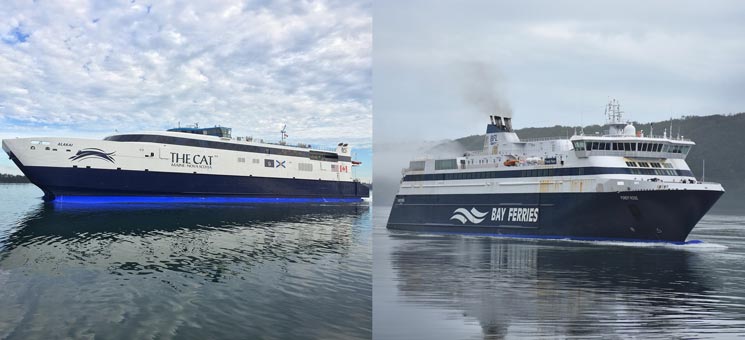
A recent trip on the ferry from Saint John, New Brunswick to Digby, Nova Scotia prompted a thought. The ferry was well appointed and completed its journey in 2 hours and 20 minutes.
The Digby ferry operates year-round at modest cost. It is a viable competitor to the ferry from Bar Harbour to Yarmouth, running mid-April till November.
A traveller from Boston would take 4 hours and 35 minutes to reach Bar Harbour, followed by a 3 hour and 30 minute trip to Yarmouth, a total of just over 8 hours. There is one sailing each way per day, fewer in the shoulder seasons.
The same traveller from Boston would take 6 hours and 20 minutes to drive to Saint John, from which the ferry takes a little over 2 hours to reach Digby. The total travel time is a negligible difference from the trip through Bar Harbour.
The Digby ferry runs all year, with two round trips daily in the peak season. When a traveller arrives at Digby they can get to Liverpool and the rest of the South Shore more quickly than from Yarmouth.
The cost for a one-way trip on the Yarmouth ferry in peak season is US$209 for a car and US$121 per adult. The CAT made 119 round trips in 2025, and trips were cancelled because of weather on 13 days. Its maximum capacity is 200 cars per trip.
For the Saint John – Digby ferry, the one-way fees in peak season are $64 for cars and $21.50 for adults, less for students and others depending on age. Its maximum capacity is 245 cars per trip.
The operators of the Saint John – Digby ferry have not reported numbers for 2025. There were 127,000 passengers in 2023, and peak travel in 2025 was 34% higher than the 2024 number.
Both ferry routes require government assistance. For the Saint John – Digby ferry, Transport Canada has a current funding agreement worth $58.3 million for the period of June 1, 2022, to March 31, 2027, to ensure continued operations.
Under a long-standing Memorandum of Understanding (MOU), the federal government coordinates with Nova Scotia and New Brunswick, which each contribute $1 million annually to the service.
The Nova Scotia government heavily subsidizes the Yarmouth ferry every year, contributing $21.6 million in 2025. It transported 16,233 vehicles. That makes the subsidy $1,330 per vehicle transported. That includes vehicles going back to Bar Harbor, support for which the state of Maine makes no contribution.
Canada’s government does not provide financial support for that ferry. It may be in part because most of the jobs are American.
The ferry is staffed by American-certificated mariners. Likewise, the load and unload workers at Bar Harbour are all American.
There are four different ways a New England tourist can come to Nova Scotia: drive to Bar Harbor and ferry to Yarmouth; drive to St. John and ferry to Digby; drive all the way to Nova Scotia; or fly to Halifax and rent a car.
All of these are used. The choices are influenced by issues of cost, travel time, and which parts of the province they want to see.
Each choice results in an economic benefit for the affected communities. If one of the choices is no longer available, some of that benefit will be retained by travellers choosing one of the other routes.
So, if flights from Boston to Halifax were no longer offered, many of the affected travellers would still come by car using one of the other three routes.
The province is engaged in researching what should be done when the current contract for the catamaran ferry ends.
Yarmouth’s political influence has been effective over the years. When the first flights from Boston to Halifax began, the federal government insisted that the passengers disembark at Yarmouth airport for passport checks before proceeding to Halifax. These days, Yarmouth’s airport is only used for private planes and medical emergencies.
The awkwardness of having the ferry owned and crewed by Americans is acknowledged — CBC’s report describes the issues. The options being considered are not viable.
One is to buy the CAT and run it ourselves. The boat itself would be prohibitively expensive. Beyond that, there would need to be a whole set of infrastructure to keep it going: staff training programs, off-season dockage and care, maintenance of parts, inspections, and an alternative plan if the boat is disabled.
A less expensive plan would be a boat like the one running between Saint John and Digby, or the ones running between Wood Islands, PEI and Caribou, Nova Scotia, Even that would be in the $100 million vicinity.
One problem would be the transit time, which could be more than double that of the catamaran. That might make a same-day round trip untenable.
On the last day of 1999, Premier John Hamm had the courage to announce the end of Sydney Steel: “The taxpayers of Nova Scotia don’t belong in the steel-making business. We are getting out of the business, and have put an end to the burden on taxpayers.”
The steel plant was the core of the Cape Breton economy at the time, but it was never going to make money.
Premier Houston, the Yarmouth ferry is seasonally important to Yarmouth but not to the rest of the province. The province’s finances are in bad shape. It is time for you to follow John Hamm’s courage.
Related Articles
Chasing the Jobs- Carney must avoid Trudeau’s wedge politics April 17, 2025
- Be wary of ‘independent’ evaluations of government policies October 25, 2024
- When Will Our Politicians Be Honest About The Economics Of The Yarmouth Ferry? August 18, 2023
Cancel reply